Updated July 16, 2026
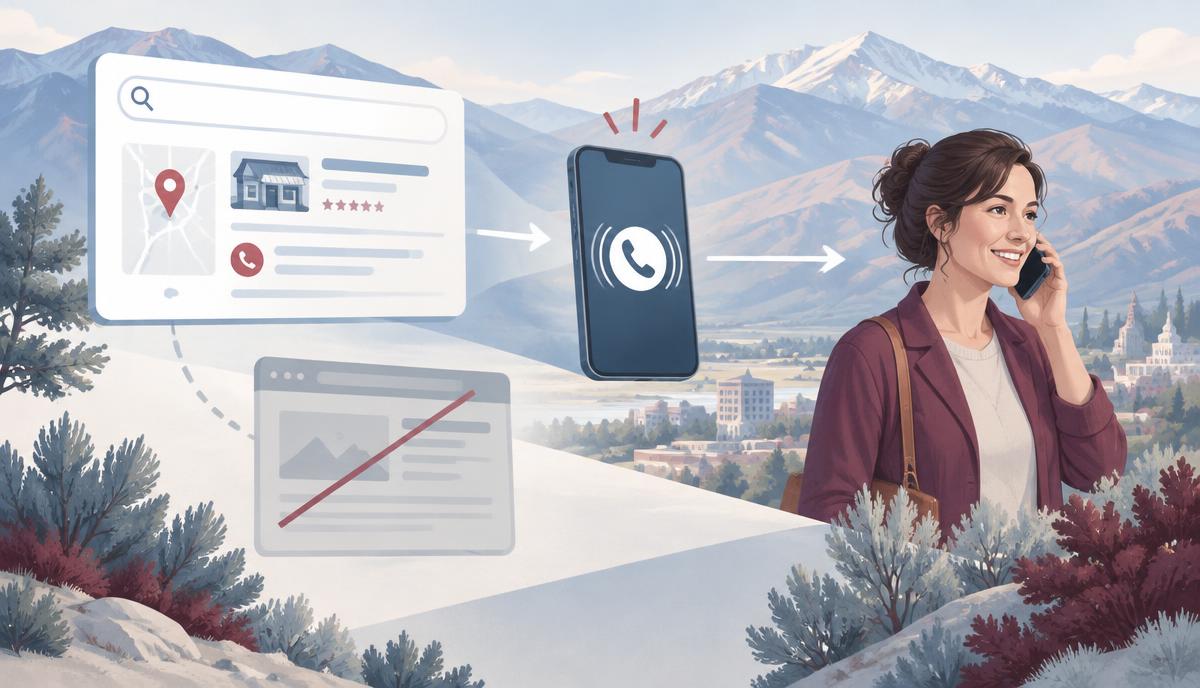
A potential customer searches for an emergency plumber, dentist, restaurant, attorney or nearby store.
Before visiting a website, the customer may already see:
- A direct answer
- An AI-generated summary
- Several recommended businesses
- Google Maps results
- Reviews and ratings
- Business hours
- Prices or product information
- Photos
- A phone button
- Appointment options
- Driving directions
The customer may call, book, visit or continue searching without ever clicking a traditional organic result.
That is the reality of zero-click search.
It does not necessarily mean search has stopped producing business. It means an increasing portion of the customer journey happens before the website visit—or without a website visit at all.
For Utah businesses, this changes more than traffic reports. It changes:
- How prospects discover companies
- Where trust is established
- Which businesses make the shortlist
- What customers know before contacting a company
- How leads should be qualified
- How marketing performance should be measured
- Which SEO investments create business value
The correct response is not to abandon SEO.
It is to build a broader search strategy that earns visibility in traditional results, Google Maps, AI-generated answers and every important stage of the customer’s decision.
What Is a Zero-Click Search?
A zero-click search is generally understood as a search that does not result in a click from the search results to an external website.
The searcher may:
- Read an answer directly in Google
- View an AI Overview
- Look at a knowledge panel
- Check a business’s hours
- Read reviews
- View photographs
- Call from a Business Profile
- Request directions
- Use a calculator or conversion tool
- Refine the search
- End the search session
- Visit another Google-owned experience
The phrase can be misleading because zero click does not always mean zero action.
A person who calls a company directly from Google Maps may never visit its website, but that search still produced a meaningful business action.
A person who reads an AI answer and does nothing else represents a more traditional zero-click outcome.
Those two searches should not be treated as equivalent.
How Common Are Zero-Click Searches?
The precise percentage depends on how the study defines a search, a click and an external website.
A widely cited 2024 study from SparkToro and Datos found that approximately 58.5% of U.S. Google searches ended without a click. The study separated traditional zero-click searches from clicks that remained within Google’s own properties.
You can review the original SparkToro and Datos zero-click study.
AI-generated results appear to be accelerating the change.
A 2025 Pew Research Center study found that users clicked a traditional search result during 8% of visits that displayed a Google AI summary, compared with 15% of visits without an AI summary.
Read the Pew Research Center analysis of AI summaries and clicks.
An updated 2026 Ahrefs analysis estimated that AI Overviews reduced the click-through rate of top-ranking pages by approximately 58% in its studied dataset.
These findings should not be treated as a universal traffic forecast for every business or keyword. They demonstrate that ranking position alone no longer predicts clicks as reliably as it once did.
The effect varies considerably by:
- Search intent
- Industry
- Query wording
- Device
- Search-result layout
- Presence of advertisements
- Presence of maps
- Presence of an AI Overview
- Brand familiarity
- Whether an immediate action is available
- Whether the answer requires deeper research
Zero-Click Search Is Not New
Google has answered some searches directly for years.
Long before AI Overviews, searchers could obtain information from:
- Featured snippets
- Weather results
- Sports scores
- Knowledge panels
- Local map packs
- Calculators
- Currency converters
- Definitions
- Flight information
- Hotel results
- Shopping results
- “People also ask” results
What has changed is the breadth and sophistication of the information available directly in search.
AI Overviews and AI Mode can combine information from several sources, answer more complex questions and help users continue researching through follow-up prompts.
At the same time, local results allow customers to compare businesses and take action without leaving Google.
The search results page is no longer simply a list of links.
It is an information, comparison and decision-making environment.
Not Every Zero-Click Search Has Business Value
A high zero-click percentage should not automatically be celebrated or feared.
Some zero-click searches have no realistic commercial value.
Examples include:
- “What time is it in London?”
- “How many ounces are in a pound?”
- “Weather tomorrow”
- “Define search engine optimization”
- “How old is a celebrity?”
- “Utah population”
A business may have previously received visits from some of these informational searches, but many of those visitors were unlikely to become customers.
Other zero-click searches have significant commercial value:
- “Emergency plumber near me”
- “Dentist open Saturday”
- “Restaurants near Zion National Park”
- “Call an HVAC company in St. George”
- “Directions to a gun store”
- “Book a hotel in Salt Lake City”
- “Best med spa near me”
The business value depends on the intent and resulting action—not simply whether a click occurred.
Zero-Click Search Does Not Automatically Improve Lead Quality
One of the most common claims about zero-click search is that it produces fewer but better leads.
That can happen, but it is not guaranteed.
Google has stated that people who click through from search-result pages containing AI Overviews may be more engaged and spend more time on the destination website. Google’s position is that the AI result provides additional context and helps users reach more relevant supporting pages.
Third-party research has generally focused more heavily on the decline in total clicks.
Both findings can be true:
- AI results may reduce the number of website visits.
- The smaller number of people who still click may have a stronger reason to visit.
- Some direct calls may be highly qualified.
- Other direct callers may know very little about the business because they skipped its website.
Zero-click search changes the composition of traffic and leads. It does not improve every lead automatically.
How Zero-Click Search Can Improve Lead Quality
In some circumstances, search-result features help prospects perform preliminary research before contacting a business.
A potential customer may already know:
- The company is nearby
- The business is open
- It offers the requested service
- It has strong reviews
- It appears established
- It accepts appointments
- Its photographs look professional
- Other sources mention it positively
That customer may call with a clear need and a near-term intention to buy.
This is particularly common for:
- Emergency services
- Restaurants
- Healthcare appointments
- Repair services
- Local retail
- Hotels
- Entertainment
- Transportation
- Appointment-driven services
The search result has handled part of the qualification process.
How Zero-Click Search Can Reduce Lead Quality
The opposite can also happen.
A customer who calls directly from a map listing may not know:
- The company’s minimum project size
- Whether it serves the customer’s city
- What the service includes
- Approximate pricing
- Whether insurance is accepted
- Whether the business offers residential or commercial work
- Whether an appointment is required
- Whether the product is in stock
- Whether the company is a good match
A website normally provides that context.
When the website visit disappears, the phone call may occur earlier in the research process.
This can increase:
- Unqualified calls
- Price-only inquiries
- Calls from outside the service area
- Requests for services the business does not provide
- Questions already answered on the website
- Time spent qualifying poor-fit prospects
Businesses should therefore evaluate lead quality using actual sales data rather than assuming every direct search action is a stronger lead.
The Four Main Types of Zero-Click Search
Understanding the different types of zero-click behavior helps businesses choose the right response.
1. Informational Zero-Click Searches
The search engine answers the question directly.
Examples include:
- Definitions
- Basic instructions
- Simple factual questions
- Dates
- Calculations
- Introductory explanations
- Frequently asked questions
These searches are most vulnerable to featured snippets and AI-generated summaries.
A business may receive fewer visits from basic educational content, but that content can still create value when it:
- Introduces the brand
- Earns an AI citation
- Supports topical authority
- Leads to a more advanced question
- Helps another important page rank
- Answers a question potential customers need resolved
2. Local Zero-Click Searches
The customer interacts with a Google Business Profile or map result instead of visiting the website.
Possible actions include:
- Calling
- Requesting directions
- Viewing hours
- Reading reviews
- Looking at photos
- Checking services
- Making a reservation
- Booking an appointment
- Visiting a menu
- Selecting an ordering option
These searches can produce substantial business value even though analytics records no website session.
For companies that depend on nearby customers, Google Business Profile optimization must be coordinated with a complete local SEO strategy.
3. AI-Assisted Zero-Click Searches
An AI Overview, AI Mode or another answer platform synthesizes information and answers the question without requiring a website visit.
The response may:
- Explain a service
- Compare options
- Recommend a process
- List considerations
- Identify businesses
- Summarize several sources
- Suggest next steps
The user may end the journey there, refine the question or click a cited source for more detail.
4. Branded and Navigational Zero-Click Searches
A customer searches directly for a known business and obtains the needed information from the result.
Examples include:
- “[Business name] phone number”
- “[Business name] hours”
- “[Business name] address”
- “[Business name] reviews”
- “[Business name] appointment”
- “[Business name] directions”
These searches are often influenced by earlier marketing.
A customer may have first encountered the company through:
- An advertisement
- Social media
- A referral
- A vehicle wrap
- A podcast
- A sponsorship
- A previous organic result
- An AI recommendation
- Word of mouth
The final search appears organic or zero-click, but another channel may have created the demand.
How Zero-Click Search Changes the Customer Journey
The traditional SEO journey was often described as:
- Customer searches.
- Customer clicks.
- Customer visits the website.
- Customer reads several pages.
- Customer submits a form or calls.
- The website visit receives attribution.
The modern journey may look like:
- Customer sees an advertisement.
- Customer searches the brand.
- Customer reads reviews in Google.
- Customer asks an AI tool to compare options.
- Customer searches the business again.
- Customer calls directly from the map result.
- No website session receives credit.
Another journey may be:
- Customer asks a detailed question.
- Google displays an AI Overview.
- The company is cited as a source.
- The customer learns the basic information.
- The customer clicks only when ready to compare providers or take action.
- The website receives less traffic but a more deliberate visitor.
This is why last-click website analytics can no longer explain the entire search journey.
Traffic, Visibility and Demand Are Different Metrics
Businesses frequently use website traffic as a substitute for demand.
That relationship is becoming less reliable.
Traffic
The number of people who visit the website.
Search Visibility
How frequently and prominently the business appears in relevant search experiences.
Visibility may occur through:
- Organic rankings
- AI citations
- Maps
- Local packs
- Featured snippets
- Shopping results
- Image results
- Videos
- Business Profiles
- Knowledge panels
Demand
The number of people interested in the business, service or product.
Demand may express itself through:
- Searches
- Calls
- Directions
- Bookings
- Forms
- Store visits
- Branded searches
- Purchases
- Referrals
- Repeat customers
Traffic can decline while search visibility and demand remain steady.
Traffic can also decline because the business has genuinely lost visibility or market demand.
Do not use “zero-click search” as an automatic explanation for every traffic decrease. Investigate the cause.
Why Rankings Can Rise While Traffic Falls
A page can maintain or improve its ranking while receiving fewer clicks.
Possible causes include:
- An AI Overview above the result
- More advertisements
- A local map pack
- Shopping results
- Video results
- Image results
- A featured snippet
- A competitor with a stronger title
- Google answering the question directly
- Search demand shifting
- Changes in mobile result layouts
- A decline in the underlying query volume
Rank tracking alone does not show what occupied the space above, below or around the result.
Search-result layout must be part of SEO analysis.
How AI Overviews Change the Value of Informational Content
Informational content is not dead, but generic answers are easier to replace.
A page that provides only a basic definition may be summarized without generating a click.
For example, a searcher may not need to visit a website to learn:
- What SEO stands for
- What a root canal is
- What an HVAC system does
- Whether Utah requires a business license
- What a particular legal term means
To earn a click, the page may need to provide something the summary cannot fully deliver.
That may include:
- Original research
- A calculator
- An interactive tool
- A downloadable resource
- Local data
- Expert analysis
- A detailed comparison
- Pricing methodology
- Project examples
- Photographs
- Case studies
- Firsthand experience
- Templates
- Videos
- Step-by-step implementation
- Information specific to a situation
- A transaction or appointment
The objective is not to withhold the basic answer.
Answer the immediate question clearly, then provide enough unique value to justify deeper engagement.
Content That Can Create Value Without a Click
Not every page must produce an immediate website visit to be valuable.
Content may influence a customer by:
- Being cited in an AI answer
- Establishing the brand as a credible source
- Supporting another page’s rankings
- Answering an objection
- Reinforcing an earlier recommendation
- Increasing branded search
- Earning links
- Building professional authority
- Helping search engines understand the business
This influence is harder to measure than a direct click, but it is not imaginary.
The challenge is separating meaningful visibility from vanity impressions.
Content That Should Still Earn the Click
Businesses should invest in assets that customers need to experience directly.
Examples include:
- Pricing calculators
- Product inventory
- Appointment scheduling
- Detailed case studies
- Before-and-after galleries
- Service-area tools
- Interactive assessments
- Original research
- Client portals
- Downloadable templates
- Product comparisons
- Video demonstrations
- Complete buying guides
- Financing tools
- Custom recommendations
- Quizzes
- Practice tests
- Configurators
These assets provide a reason to leave the search result and visit the website.
They may also earn backlinks and mentions that strengthen the entire domain.
How Zero-Click Search Affects Local Businesses
Local businesses experience zero-click search differently from informational publishers.
A publisher typically needs the website visit to generate advertising, subscription or affiliate revenue.
A local company may only need the customer to:
- Call
- Visit
- Book
- Request directions
- Place an order
For that reason, some zero-click local searches are highly valuable.
The problem is measurement.
Google Business Profile performance can report interactions such as:
- Calls or call clicks
- Website clicks
- Direction requests
- Messages when available
- Bookings
- Menu interactions
- Other profile actions
Google also allows eligible businesses to connect Business Profile performance information with Google Analytics.
Review Google’s official documentation for Business Profile performance and connecting Business Profile with Google Analytics.
Profile interactions are still not equivalent to completed sales.
A direction request does not prove the person arrived. A call click does not prove the caller was qualified. A booking request does not prove the customer attended.
Connect search actions to business outcomes whenever possible.
How Zero-Click Search Affects Ecommerce
Ecommerce companies still depend heavily on website visits because the transaction generally happens on the website or app.
However, shoppers may perform more research before clicking.
They can see:
- Product prices
- Ratings
- Availability
- Images
- Merchant information
- Shipping information
- Product comparisons
- AI-generated recommendations
- Shopping results
This may reduce visits from customers who quickly determine that the product is not right for them.
It can also make the remaining clicks more commercially focused.
Ecommerce businesses should measure:
- Organic revenue
- Conversion rate
- Revenue per organic session
- Product-level search visibility
- Merchant Center performance
- New-customer acquisition
- Branded demand
- Assisted conversions
- AI referral traffic
- Product-feed accuracy
A decrease in informational sessions may matter less than a decrease in product revenue.
How Zero-Click Search Affects Professional Services
Attorneys, accountants, financial professionals, consultants, therapists and healthcare providers often have longer and more trust-dependent buying cycles.
Prospects may use search and AI to evaluate:
- Qualifications
- Experience
- Specialties
- Reviews
- Credentials
- Locations
- Professional history
- Fees
- Treatment or service approaches
- Potential outcomes
- Risks
- Alternatives
The final phone call may happen without a website visit, but the business may have been evaluated across many other sources.
This increases the importance of consistent information across:
- Company website
- Professional profiles
- Google Business Profile
- Industry directories
- Licensing sources
- News articles
- Reviews
- Associations
- Author biographies
- Third-party mentions
For high-trust services, the brand’s wider digital reputation may influence the lead before the company knows the prospect exists.
How Zero-Click Search Affects Home-Service Companies
Plumbers, roofers, HVAC contractors, electricians, restoration companies and other home-service providers frequently receive direct calls from local results.
Urgent searches can produce fast decisions.
Examples include:
- “Emergency plumber near me”
- “AC repair open now”
- “Water damage company St. George”
- “Electrician Salt Lake City”
- “Roof leak repair”
Lead quality may be high when:
- The service matches the need
- The company is nearby
- The customer needs immediate help
- Reviews create confidence
- The profile clearly communicates availability
Lead quality may be poor when:
- The customer is outside the service area
- The business does not provide that service
- The customer expects an unrealistic price
- The company serves commercial clients but receives residential calls
- The customer does not meet a minimum project requirement
Service descriptions, categories, photos, website pages and intake scripts should work together to reduce these mismatches.
How Zero-Click Search Affects Restaurants, Retail and Tourism
For restaurants, stores, attractions and hospitality companies, many valuable customer actions occur without a website visit.
Customers may use search to:
- Check hours
- View a menu
- See photographs
- Read reviews
- Request directions
- Call
- Make a reservation
- Find parking
- Confirm accessibility
- Check availability
This is particularly important in Utah tourism markets such as:
- St. George
- Springdale
- Zion National Park
- Moab
- Park City
- Salt Lake City
- Cedar City
- Bryce Canyon-area communities
A customer who is already traveling may prefer the fastest available answer over a detailed website experience.
Accurate maps listings, current hours, strong photographs and easy directions can therefore generate measurable value without producing traditional organic traffic.
Why Attribution Becomes More Difficult
Zero-click search creates gaps in standard analytics.
Paid Advertising Can Produce an Organic Call
A customer sees an advertisement, remembers the name, searches later and calls from Google Maps.
The call may be classified as organic even though the advertisement introduced the brand.
Social Media Can Produce Branded Search
A customer sees a video, searches the company and requests directions.
Google receives the visible action, but social media influenced the decision.
AI Can Influence a Direct Visit
A customer asks ChatGPT or another assistant for recommendations, remembers a company name and later types the website address directly.
Analytics may report direct traffic even though AI created the discovery.
Word of Mouth Can Look Like SEO
A friend recommends a company. The customer searches its name, reads reviews and calls from the listing.
Organic search helped validate the business but did not create the initial awareness.
SEO Can Influence a Later Branded Conversion
A customer discovers the company through an informational article, leaves, searches the brand several days later and calls from Maps.
The original article may receive no conversion credit.
Attribution should therefore be used as a decision-making model, not treated as a perfect historical record.
The Metrics Utah Businesses Should Track
Website sessions still matter, but they should be reviewed within a broader measurement framework.
Search Visibility Metrics
Track:
- Important keyword rankings
- Search impressions
- Organic clicks
- Organic click-through rate
- Branded search impressions
- Non-branded search impressions
- Local map visibility
- AI Overview appearances
- AI citations
- Search-result features
- Share of search visibility
- Competitor visibility
These metrics show whether the company is being found, but not whether visibility produces revenue.
Search-Action Metrics
Track:
- Website clicks
- Phone clicks
- Qualified calls
- Direction requests
- Appointment requests
- Reservations
- Menu interactions
- Product clicks
- Form submissions
- Chat starts
- Email clicks
These metrics show customer activity but do not necessarily represent completed sales.
Lead-Quality Metrics
Track:
- Qualified lead rate
- Sales-accepted lead rate
- Appointment-set rate
- Show rate
- Quote rate
- Proposal rate
- Close rate
- Average lead value
- Average sale value
- Service-area eligibility
- Lead-to-customer time
- Reason for disqualification
This is where businesses can determine whether zero-click leads are actually better.
Business-Outcome Metrics
Track:
- Booked revenue
- Collected revenue
- Gross profit
- Customer acquisition cost
- Revenue by service
- Revenue by location
- New-customer revenue
- Repeat-customer revenue
- Customer lifetime value
- Return on marketing investment
Marketing reports should ultimately connect to these outcomes.
Measure Lead Quality by Entry Path
Do not combine every organic lead into one category.
When possible, compare:
- Calls from Google Business Profile
- Calls from website landing pages
- Organic forms
- Paid-search leads
- Local Services Ads
- Social-media leads
- AI referral traffic
- Direct traffic
- Referral traffic
- Returning customers
Evaluate:
- Qualification rate
- Booking rate
- Close rate
- Revenue per lead
- Average project size
- Cancellation rate
- Sales effort required
This analysis may reveal that direct profile calls convert quickly but have lower average project values—or that organic forms take longer to close but produce larger jobs.
The answer will vary by business.
Build a Better Zero-Click Tracking System
1. Configure Google Search Console
Search Console remains essential for monitoring:
- Impressions
- Clicks
- Average position
- Search queries
- Landing pages
- Countries
- Devices
- Search appearance
In June 2026, Google introduced dedicated generative AI performance reporting for visibility within AI Overviews, AI Mode and related generative features.
Review Google’s announcement about generative AI performance reports in Search Console.
Use this information to determine whether:
- Impressions are rising while clicks fall
- Particular topics trigger AI results
- AI visibility is producing visits
- Branded demand is increasing
- Important commercial pages retain click-through rates
2. Review Google Business Profile Performance
Monitor:
- Search interactions
- Calls
- Website clicks
- Direction requests
- Bookings
- Menu clicks
- Other available actions
Compare profile actions with actual:
- Calls answered
- Appointments scheduled
- Store visits
- Jobs booked
- Sales
Do not treat every profile interaction as a conversion.
3. Use UTM Parameters
Add consistent UTM parameters to eligible listing, campaign and profile links.
For example:
?utm_source=google&utm_medium=organic&utm_campaign=gbp
Google Analytics uses campaign parameters to identify traffic sources and campaigns.
Review Google’s official URL-builder and campaign-tagging guidance.
Use one naming standard across all locations.
4. Configure Call Tracking Carefully
Call tracking can help identify:
- Call source
- Call duration
- New versus returning callers
- Answer rate
- Call outcome
- Qualified call rate
- Booking rate
Use dynamic number insertion on the website when appropriate.
For local listings, preserve the business’s primary phone-number consistency and configure tracking numbers carefully. Do not replace important business information without understanding how the numbers will be displayed, stored and attributed.
5. Connect Leads to a CRM
Record more than the lead source.
Useful fields include:
- Original source
- Latest source
- Campaign
- Landing page
- Search location
- Requested service
- Lead quality
- Disqualification reason
- Appointment outcome
- Proposal value
- Closed revenue
- Sales cycle
- New or returning customer
The CRM should explain what happened after the call or form submission.
6. Ask Customers How They Found You
Self-reported attribution is imperfect, but useful.
Ask a simple question during intake:
How did you first hear about us?
Possible responses include:
- Google search
- Google Maps
- AI or ChatGPT
- Referral
- Social media
- Advertisement
- Previous customer
- Saw the business locally
- Other
The word first matters. Asking only “How did you contact us?” captures the final action rather than the source of discovery.
7. Import Offline Outcomes
When possible, connect marketing leads to:
- Appointments
- Qualified opportunities
- Closed sales
- Revenue
- Repeat purchases
A campaign that produces fewer leads may still be more valuable if those leads close at a higher rate and generate more profit.
How Businesses Should Adapt Their SEO Strategy
Zero-click search does not eliminate the need for a website. It raises the standard for what the website and broader brand presence must accomplish.
Build Visibility Across the Entire Search Result
A complete campaign may include:
- Traditional organic rankings
- Google Business Profile
- Local map visibility
- AI Overview visibility
- Images
- Video
- Shopping and product feeds
- Review platforms
- Industry directories
- News and editorial mentions
- Knowledge and entity information
Utah SEO Experts builds SEO campaigns for Utah businesses around technical performance, content, local visibility, authority and AI-powered discovery rather than treating rankings as an isolated metric.
Answer Basic Questions Clearly
Do not avoid direct answers in an attempt to force the click.
A vague page may fail to rank, fail to earn citations and frustrate the visitor who reaches it.
Provide a concise answer, then expand with:
- Context
- Exceptions
- Examples
- Local considerations
- Evidence
- Experience
- Implementation steps
- Original information
Make the page easy for both people and search systems to understand.
Create Information That Cannot Be Easily Commoditized
Generic information is easier to summarize or replace.
Strengthen content with:
- Original business data
- Firsthand experience
- Expert commentary
- Project examples
- Local market knowledge
- Actual pricing considerations
- Photographs
- Documented processes
- Case studies
- Tools
- Calculators
- Unique comparisons
- Customer questions
- Practical limitations
- Mistakes observed in real campaigns
Google’s current guidance for generative AI search emphasizes foundational SEO and unique, expert-led, people-first content rather than special AI-search tricks.
Strengthen Entity and Brand Signals
Search and AI systems should be able to determine:
- Who the company is
- What it does
- Where it operates
- Who leads it
- Why it is credible
- Which services it provides
- Which sources confirm those facts
Keep important information consistent across:
- Website
- Google Business Profile
- Apple Business
- Bing Places
- Social profiles
- Industry directories
- Professional associations
- Licensing records
- News coverage
- Author profiles
- Review platforms
A recognizable brand is more resilient when generic informational clicks decline.
Optimize for AI Search Without Abandoning SEO
Google’s official guidance states that the foundational practices used for traditional SEO remain relevant to its generative AI search features.
That includes:
- Crawlable pages
- Clear site architecture
- Useful content
- Descriptive titles
- Internal links
- Strong page experience
- Original value
- Accurate structured data
- Quality images and video
- Merchant Center information
- Google Business Profile information
Our AI search optimization services focus on making businesses easier to discover, understand and cite across Google AI features, ChatGPT, Gemini, Perplexity and other answer-based platforms.
No agency can guarantee a citation, recommendation or AI-generated mention.
Strengthen Local Search Visibility
For local businesses, the search result itself functions as a landing page.
Maintain:
- Correct categories
- Accurate hours
- Complete services
- Current photographs
- Appointment links
- Professional reviews
- Clear business descriptions
- Accurate location information
- Working phone numbers
- Appropriate products or menus
A strong Business Profile does not replace the website. It helps customers reach the right next step.
Improve Website Conversion for the Clicks You Still Receive
As informational clicks become less reliable, each qualified website visit matters more.
Important improvements include:
- Clear primary call to action
- Visible phone number
- Fast mobile performance
- Short forms
- Easy scheduling
- Clear service areas
- Specific service descriptions
- Trust signals
- Credentials
- Reviews
- Project examples
- Pricing context
- Financing information
- Helpful frequently asked questions
Utah businesses with outdated or confusing sites may need web design built around SEO and conversion rather than another round of superficial content additions.
Create Strong Decision-Stage Pages
Businesses need pages for customers who have already completed much of their research.
Examples include:
- Service pages
- Product and collection pages
- Pricing pages
- Comparison pages
- Location pages
- Provider profiles
- Case studies
- Appointment pages
- Consultation pages
- Financing pages
- Warranty pages
- Frequently asked questions
These pages should help a qualified prospect make a confident decision quickly.
Build Demand Beyond Unbranded Search
Businesses that rely entirely on generic search traffic are more exposed to changing result layouts.
Build brand demand through:
- Customer experience
- Referral programs
- Social media
- Video
- Community involvement
- Public relations
- Sponsorships
- Partnerships
- Events
- Remarketing
- Useful proprietary resources
- Repeat-customer programs
When customers search for the company by name, the business is less dependent on winning a generic category click every time.
Earn Credible External Mentions
AI-generated answers and traditional search systems can evaluate information from across the web.
Potential sources include:
- Industry publications
- Local media
- Professional associations
- Chambers of commerce
- Government databases
- Suppliers
- Manufacturers
- Universities
- Podcasts
- Community organizations
- Relevant directories
- Partner websites
Do not pursue fake mentions or mass-produced placements simply to influence AI systems.
Google specifically advises against inauthentic mentions and other supposed AI-optimization shortcuts.
What Utah Business Owners Should Ask Their Marketing Teams
Replace:
How much traffic did we get?
with a broader set of questions:
- Did visibility increase for commercially important searches?
- Which search features appear for our target queries?
- Are AI Overviews reducing click-through rates?
- Are we being cited in AI-generated results?
- Are branded searches increasing?
- How many qualified calls came from Maps?
- Which landing pages produce revenue?
- Has the organic lead qualification rate changed?
- Which services generate the most valuable leads?
- Are calls being answered?
- What percentage of appointments show?
- What percentage of proposals close?
- Which geographic markets produce profitable customers?
- Are declining clicks affecting revenue—or only informational sessions?
- Which competitors are gaining visibility?
- Where is the customer making the decision before reaching our website?
The marketing team should be able to connect search performance to real business outcomes.
Zero-Click Search in Salt Lake City
Salt Lake City businesses often compete across a crowded search environment that includes:
- Organic results
- Google Maps
- Local Services Ads
- Paid search
- Directories
- Review platforms
- AI Overviews
- Nearby municipalities
A customer searching in downtown Salt Lake City may receive a different local result than someone making the same search in Sandy, Draper, West Valley City or South Jordan.
Proximity, competition and local intent affect the businesses customers see.
A complete Salt Lake City SEO strategy should therefore measure more than one citywide ranking. It should evaluate maps visibility, organic pages, AI results, lead quality and conversion across the actual market.
Zero-Click Search in St. George and Southern Utah
Southern Utah search behavior is influenced by:
- Population growth
- Tourism
- Seasonal visitors
- Retirement communities
- Construction
- Regional healthcare
- Outdoor recreation
- Overlapping city boundaries
- Customers searching from outside Utah
Searches may move among St. George, Washington, Santa Clara, Ivins, Hurricane, Cedar City and nearby destinations.
A direction request from a visitor may be more valuable than a blog visit. A local resident researching a high-value service may need several website pages before making contact.
A St. George SEO campaign should account for both behaviors rather than assuming every searcher follows the same path.
Common Zero-Click Search Myths
Myth: Zero Click Means Zero Value
A direct call, booking or direction request may create value without a website visit.
Myth: Zero-Click Leads Are Always Better
Some prospects are ready to buy. Others call before understanding the service. Measure qualification and revenue.
Myth: Websites Are Becoming Unnecessary
Websites remain important for detailed information, transactions, authority, conversions and information that cannot fit inside a search result.
Myth: Traffic No Longer Matters
Traffic still matters, particularly for ecommerce, publishers and longer sales cycles. It simply should not be the only performance metric.
Myth: Rankings No Longer Matter
Rankings still influence visibility and inclusion in search features. Position alone, however, no longer predicts the same number of clicks.
Myth: Every Traffic Decline Is Caused by AI
Traffic can decline because of lost rankings, lower demand, technical problems, weak titles, stronger competition, seasonality or algorithmic changes. Diagnose the actual cause.
Myth: AI Search Requires Completely Different SEO
Google says its generative AI search features are rooted in its core search and quality systems. Strong technical SEO, useful content and credible authority remain foundational.
Myth: Being Cited Guarantees Traffic
An AI citation can provide visibility and credibility without generating many visits. Citation value must be evaluated alongside clicks, brand demand and business outcomes.
Myth: More Impressions Always Mean More Success
Impressions can increase for irrelevant or low-value searches. Focus on commercially meaningful visibility and outcomes.
Zero-Click Search Audit Checklist
Review the following:
Search Visibility
- Important organic rankings
- Search-result features
- AI Overview appearances
- AI citations
- Local map visibility
- Branded versus non-branded impressions
- Organic click-through rates
- Competitor visibility
Local Search
- Google Business Profile completeness
- Categories
- Services
- Products or menus
- Hours
- Photos
- Reviews
- Appointment links
- Calls
- Directions
- Website clicks
Website
- Mobile speed
- Calls to action
- Phone visibility
- Form usability
- Service pages
- Location pages
- Pricing context
- Trust signals
- Expert information
- Case studies
- Original resources
- Structured data
- Internal links
Measurement
- Search Console
- Generative AI performance reporting
- Google Analytics
- UTM standards
- Call tracking
- CRM source fields
- Lead-quality status
- Disqualification reasons
- Appointment outcomes
- Closed revenue
- Customer acquisition cost
Broader Authority
- Industry mentions
- Local links
- Professional profiles
- Association listings
- Licensing information
- Apple Business
- Bing Places
- Review platforms
- Brand consistency
- Author and leadership information
Frequently Asked Questions
What is a zero-click search?
A zero-click search is a search that does not result in a click to an external website. The searcher may obtain an answer directly, refine the query, call a business, request directions or end the search.
Does zero click mean the search produced no business?
No. A customer can call, book, order or request directions directly from a search result without visiting the website.
Are zero-click searches increasing?
Multiple studies indicate that a substantial share of Google searches produce no external website click. AI Overviews and other answer-focused search features appear to be contributing to lower click-through rates for many informational queries.
Do AI Overviews reduce organic traffic?
Third-party studies have found lower click-through rates when AI summaries appear. The impact varies by query, industry, result layout and whether the website is cited.
Does Google say AI Overview clicks are higher quality?
Google has said that visitors who click from pages containing AI Overviews may spend more time on destination websites because they received more context before clicking. Businesses should compare this claim with their own engagement, lead and revenue data.
Are calls from Google Maps higher-quality leads?
They can be, particularly for urgent local services. They can also be less qualified when callers have not reviewed the website. Measure qualification, booking and revenue rather than assuming.
Should we stop creating informational content?
No. Informational content can support rankings, links, AI citations, authority and customer trust. The content should provide original expertise or practical depth beyond a generic answer.
Is SEO still valuable when people do not click?
Yes. SEO affects which companies, sources, products and locations appear throughout the search experience. The strategy must measure visibility, direct actions and revenue in addition to website traffic.
How can we track zero-click conversions?
Use Business Profile performance, call tracking, CRM data, appointment information, direction data, customer surveys and offline sales outcomes. No single tool will capture the complete journey.
Can Google Analytics record a direct call from Google Maps?
A call made directly from a Business Profile does not create a normal website session. Google Business Profile performance and properly configured call tracking may provide additional information.
Should we use UTM parameters on Google Business Profile links?
Yes. Consistent UTM parameters can help distinguish Business Profile website traffic from other organic traffic in analytics.
Does appearing in an AI Overview guarantee leads?
No. It may create visibility, credibility or website visits, but inclusion does not guarantee clicks, calls or revenue.
What matters more: traffic or conversions?
Both matter, but conversions and profitable revenue are closer to the business objective. Traffic should be evaluated according to its quality, intent and contribution to sales.
Final Takeaway
Zero-click search does not mean SEO stopped working.
It means search is doing more of the work that websites once handled.
Customers can learn, compare, evaluate and act directly inside:
- Google Search
- Google Maps
- AI Overviews
- AI Mode
- Business Profiles
- Shopping results
- Other answer platforms
This can reduce website traffic.
It can also produce calls, appointments, visits and purchases that traditional analytics underreport.
Some remaining website visitors may be better informed. Some direct callers may be less qualified because they skipped important information. The only reliable answer comes from connecting search visibility to lead quality, closed sales and revenue.
The businesses most prepared for zero-click search will not optimize for clicks alone.
They will build:
- Strong traditional SEO
- Useful original content
- Accurate local listings
- Recognizable brands
- Credible external authority
- AI-search visibility
- High-converting websites
- Complete measurement systems
- Sales processes that record lead quality and outcomes
The objective is no longer simply to win the click.
It is to influence the decision—and accurately measure what happens next.
About the Author
Brenan Gale is the founder of Utah SEO Experts and has worked directly in Utah SEO and digital marketing since 2009.
His experience includes founding and growing a previous Utah SEO agency, selling that company in 2018 and later building Utah SEO Experts as a senior-led team serving businesses across Northern and Southern Utah.
Brenan and the Utah SEO Experts team work with Utah businesses on traditional SEO, Google Maps visibility, website architecture, content, technical SEO, authority development, analytics and AI-powered search discovery.
Last reviewed: July 16, 2026
Editorial note: This article combines published research, official search-platform documentation and practical observations from digital marketing campaigns. Zero-click percentages and AI search behavior vary by methodology, query, market and date. Businesses should evaluate their own visibility, lead quality and revenue before drawing conclusions from broad industry averages.
tracks outcomes beyond sessions.
That pattern is no longer rare. It is a core part of how people shortlist providers, compare options, and make contact. Senior teams feel the impact in softer numbers too. Leads feel different. Sales calls start later in the decision cycle. Marketing reports show less traffic, then pipeline stays steady, then finance asks why the story looks messy.
Zero-click behaviour does not mean zero revenue. It means the journey has shifted. Lead quality now depends on how strong your presence looks inside Google, not only on your site.
What Zero-Click Searches Means For Local Buying In Utah
Zero-click refers to searches where Google satisfies the intent on the results page. The action can still happen. It often happens faster.
Utah’s market adds its own flavour. Many service areas span multiple cities. Outdoor and home services face seasonal surges. Word of mouth still matters, then Google confirms the choice.
Here are the key ways zero-click behaviour shows up for local buyers.
The Click Gets Replaced By A Tap Or Call
Searchers can call from the results page, request directions, or message a business. A website visit never appears in analytics. Revenue still arrives.
A practical outcome follows. Your marketing team needs reporting that tracks outcomes beyond sessions.
AI Summaries Change How People Compare Providers
AI answers compress research time. Buyers can move from “learn” to “choose” fast. The tone of the summary, the sources it cites, and the businesses it surfaces can sway preference.
Brand perception now forms inside the search result itself.
Maps And Local Packs Become The Primary Shop Window
For many queries, the map pack draws the eye first. Reviews, photos, service categories, and proximity dominate attention. A weaker listing can lose enquiries even with a strong site.
Why Lead Quality Changes When Clicks Drop
Traffic used to act as the early indicator. A dip in visits signalled lower demand. That link no longer holds.
The quality shift shows up in three ways.
Here are the main components that drive the change.
Prospects Arrive With Higher Intent
A person who calls from search often wants a near-term booking. That contact tends to include location, timing, and price questions. The call feels more decisive.
Sales teams can treat these leads as late-stage conversations. Training should match that reality.
Fewer “Research” Visits Reduce Soft Signals
Some buyers still browse sites, then return later. Yet many early clicks vanish. That reduces form fills for guides, newsletter sign-ups, and chat starts.
Demand still exists. The signals sit elsewhere, mainly in listing views, calls, direction requests, and review reads.
Attribution Gets Messier Across Channels
A paid ad can spark a brand search. The brand search triggers a map result. The call comes from the listing. Analytics can credit “organic” or “direct” even if paid media triggered the chain.
Executive reporting needs a model that reflects influence, not only last click.
Where Zero-Click Shows Up Most For Utah Industries
Local intent leads the trend. Service queries, urgent needs, and “near me” searches lean heavily toward calls and map actions.
These are common Utah categories where zero-click can shape pipeline.
Home Services And Emergency Trades
Roofing, plumbing, HVAC, electrical, pest control, water damage, and locksmith work often start with urgency. Google provides quick action buttons and review context. A single negative photo can cost an enquiry.
Legal, Medical, And Local Professional Services
Many prospects want reassurance before a call. Reviews, credentials, and visible expertise matter. AI summaries may pull from third-party sources, then shape trust before a site visit.
Outdoor, Tourism, And Destination Businesses
People plan trips from mobile. Maps, hours, peak times, and photos answer many questions. Direction taps can replace a site session.
What To Measure When Website Sessions Fall
Leadership teams still need clarity. The goal stays the same. Revenue, margin, retention, and forecast accuracy.
Here are the metrics that deserve board-level attention.
Primary Outcome Metrics
- Qualified calls and call duration
- Booked jobs and show rates
- Quote acceptance rate
- Cost per booked job by channel
- Repeat customer share
Search Visibility And Trust Signals
- Listing views and actions
- Direction requests by service area
- Photo views and uploads
- Review volume and rating trend
- Brand search volume over time
Website Metrics That Still Matter
- Conversion rate on high-intent pages
- Form completion quality
- Phone clicks on mobile
- Page speed and index coverage
Zero-Click Tracking Framework For Clearer Reporting
Tools can help, yet the structure matters more than another dashboard. A strong framework ties search actions to real outcomes.
The following steps support clean reporting and better decisions.
Map Key Journeys From Search To Sale
List the paths buyers take. Keep the language simple.
- Call from listing, then booking
- Direction request, then walk-in
- Site visit, then form, then call
- Paid click, then brand search, then call
Connect Call Data To CRM Records
Call tracking numbers help, yet they can distort SEO signals if set up poorly. A balanced approach works well. Use dynamic numbers on site. Keep a consistent primary number in your listing. Store source and outcome in CRM.
Use UTM Tags For Listing Links
Add UTM parameters to the listing website link and appointment links. That keeps analytics cleaner and supports channel reporting.
Track Review Impact On Lead Quality
Correlate review themes with call outcomes. Sales teams hear objections first. Marketing teams can address them in responses, service pages, and photos.
Table: How Buyer Signals Shift In Zero-Click Search
| Stage In Journey | Classic Website-Heavy Signal | Zero-Click Signal In Search Results | What To Watch Internally |
|---|---|---|---|
| Early research | Blog reads and time on page | Review reads and photo views | Brand lift and reputation trend |
| Shortlisting | Multiple page visits | Map pack comparisons | Listing completeness and rating |
| Contact | Form fills | Tap-to-call and messages | Call quality and booked rate |
| Visit | Location page traffic | Direction requests | Service area demand by suburb |
| Trust check | Testimonials page | Review responses and Q&A | Objection themes and close rate |
Practical Moves That Improve Lead Quality Inside Google
A strong website still helps. The result page now plays a larger role in shaping trust and action.
Here are the actions that tend to improve lead quality for Utah firms.
Strengthen Your Listing Experience
Start with one clean reference. Use your Google Business Profile once, then rely on GBP after that.
- Update categories to match real services
- Add photos that show teams, vehicles, job sites, and finished work
- Publish posts that answer common buying questions
- Fill services and products sections with clear language
- Add appointment links where they fit your process
Build Review Volume With A Clear Ask
Ask at the right moment. A simple message works. A consistent habit beats a fancy campaign.
- Request reviews after a clear win
- Reply to every review with care
- Address service area details in replies
- Encourage photos from happy clients
Write Content That AI Can Cite With Confidence
AI summaries pull from sources that feel trustworthy. Your site can support that by focusing on proof.
- Real project examples with outcomes
- Clear service definitions per city or suburb
- Pricing ranges with context and constraints
- Staff credentials and licences
- Safety, warranty, and response times
Improve Conversion Friction For High-Intent Visitors
Some prospects still reach the site. Make that moment count.
- Place phone and booking options above the fold
- Keep forms short, then qualify in follow-up
- Publish clear service area coverage
- Use plain English on key pages
What Executives Should Ask Their Marketing Team
Senior leaders can steer better decisions with sharper questions.
- Which channels influence booked jobs, not only leads
- Which suburbs show growth in direction requests
- What review themes correlate with close rate changes
- Which services attract the longest calls
- How often do AI answers mention our brand or competitors
A clear answer needs shared data, shared language, and shared accountability.
Closing View For Utah Business Leaders
Zero-click search pushes decision-making into Google’s results page. That shift changes how leads look, how tracking works, and how teams explain performance.
Revenue still comes from trust, responsiveness, and strong service delivery. The main difference is where trust forms. A modern approach treats search results as a primary brand surface, then measures outcomes with the same discipline used for finance.
Momentum follows when visibility, reputation, and reporting work as one system.