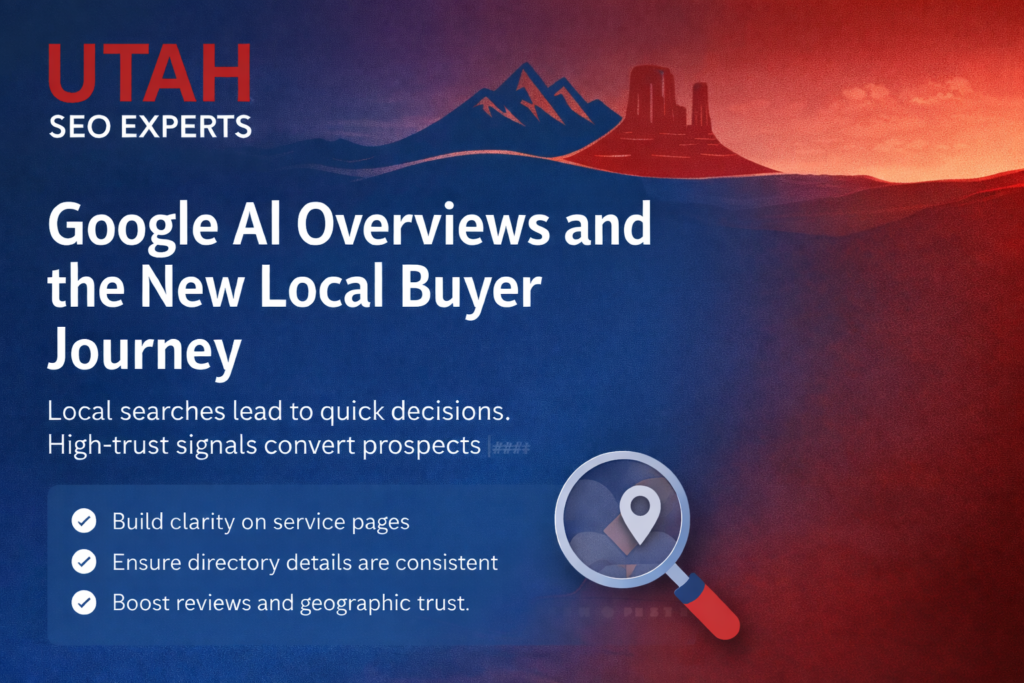
Search has turned into a short list of answers, not a set of links. That shift puts pressure on local brands to show up as the trusted source, then convert the prospect fast once they land.
Executives should treat this as a revenue issue, not a traffic debate. Lead quality, call volume, and close rate now depend on how clearly a business presents proof, scope, and location trust.
How Google AI Overviews Shift Local Buying Choices
Local intent queries often end with a decision in the results, not on your site. Prospects look for fast confirmation, then move straight to a call, directions, or a shortlist check.
Here are the shifts that matter for local SEO leads:
Google AI Overviews and the Click Path
The summary format rewards brands that answer common questions with clarity and precision. A vague service page tends to lose out to content that states what you do, where you do it, and what a customer can expect next.
C-suite teams should look out for one key pattern. Prospects still visit websites, but the bar for a visit has been raised. They arrive ready to validate, not browse.
What Buyers Do Next
A prospect often takes action through the result itself. That makes visibility and credibility inseparable.
Common next steps look like this:
- Tap to call from mobile results
- Request directions, then check trading hours
- Run a branded search for reputation signals
- Visit the site for price ranges, service scope, and proof
Signals That Earn a Citation
Local trust signals need to match across your site and public listings. Mixed details create doubt and reduce the chance of a mention.
Strong signals usually share the following traits:
- Clear service definition on primary pages
- Location cues that match real coverage areas
- Consistent business details across key directories
- Review volume with recent, relevant feedback
- Local third-party mentions from associations or media
Page Elements That Build Trust Fast
Once a visitor lands, the page must answer decision questions in plain language. Thin copy and generic claims slow the sale and often signal gaps in on-page SEO.
High-performing pages tend to include the following:
- Price bands with a short explanation of what shifts costs
- Inclusions, exclusions, and service limits are stated early
- Licence, insurance, and warranty details near the top
- Short case examples with outcomes and time frames
- A simple quote path with clear response times
Measurement and Content Plan for Local AI Results
Boards and leadership teams want proof that visibility turns into booked work. A clean measurement model ties channel exposure to calls, forms, and sales outcomes.
The following framework covers reporting and page priorities:
Reporting That Proves Impact
Standard analytics can miss the real story. Many prospects convert through calls and map actions, so reporting needs inputs from search data, call analytics, and CRM fields.
This table sets out a practical scorecard.
| Metric | Where It Sits | What It Tells Leaders |
| Branded search lift | Search Console, Trends | Brand demand and recall |
| Calls and form leads | Call analytics, CRM | Channel value and volume |
| Map actions | Google Business Profile reports | Local intent strength |
| Quote-to-book rate | CRM pipeline | Sales efficiency |
| Page assists | Event data in analytics | Which pages move deals |
Content Priorities for Utah Service Firms
A smaller set of pages can outperform a large blog archive if each page does a defined job. Service pages should carry the revenue load, with support content that answers buying questions and backs claims with proof.
Priorities that suit most local operators include these steps:
- Build one core page per main service with a clear scope
- Add supporting pages for pricing, FAQs, and project proof
- Link from support pages to the relevant service pages
- Match service area language to real travel and job patterns
- Use consistent naming for services across the site and listings
Conclusion and Next Steps for Utah Teams
Strategy needs a short cycle and tight feedback. Pick one service line, improve proof and clarity on the money pages, then watch leads and close rates rather than sessions.
A practical next move pairs two actions. Refresh the top service pages for scope, pricing ranges, and credibility cues, then tighten reporting so sales outcomes trace back to the pages and queries that drive them.
One month of clean data often beats a year of noisy traffic charts.