
Shopify gives ecommerce businesses a powerful foundation for hosting, checkout, payments, and store management, but the platform alone does not create sales. A Shopify store still needs the right design, structure, SEO setup, product organization, and conversion strategy to become a real business asset.
Utah SEO Experts builds Shopify websites for Utah ecommerce businesses, product-based retailers, service businesses selling online, and brands managing larger product catalogs. Every Shopify build is handled in-house by our Utah team, from site architecture and design through launch, SEO setup, and post-launch optimization.









Shopify is the right choice when ecommerce is the primary function of the site and operational simplicity matters. It is purpose-built for selling, which means the checkout flow, payment processing, inventory management, and order fulfillment workflows are handled at the platform level. You are not assembling those capabilities from plugins the way you would on WordPress. For businesses that want to focus on products and sales rather than server maintenance and plugin compatibility, Shopify removes a lot of friction.
Shopify fits best when you have a defined product catalog, need a reliable checkout experience across mobile and desktop, and want a platform that scales without requiring a developer on retainer for routine operations. It is also the correct platform when you anticipate significant growth and may eventually need Shopify Plus features such as Shopify Scripts, custom checkout extensions, or B2B functionality.
Shopify is not always the right answer. If your business needs deep content marketing, complex landing page architectures, or significant custom database functionality outside of ecommerce, a WordPress build may serve you better. We build on both platforms and will tell you which one actually fits your situation rather than defaulting to one. Our Utah web design work covers both Shopify and WordPress, and the recommendation always starts with what your business actually needs.
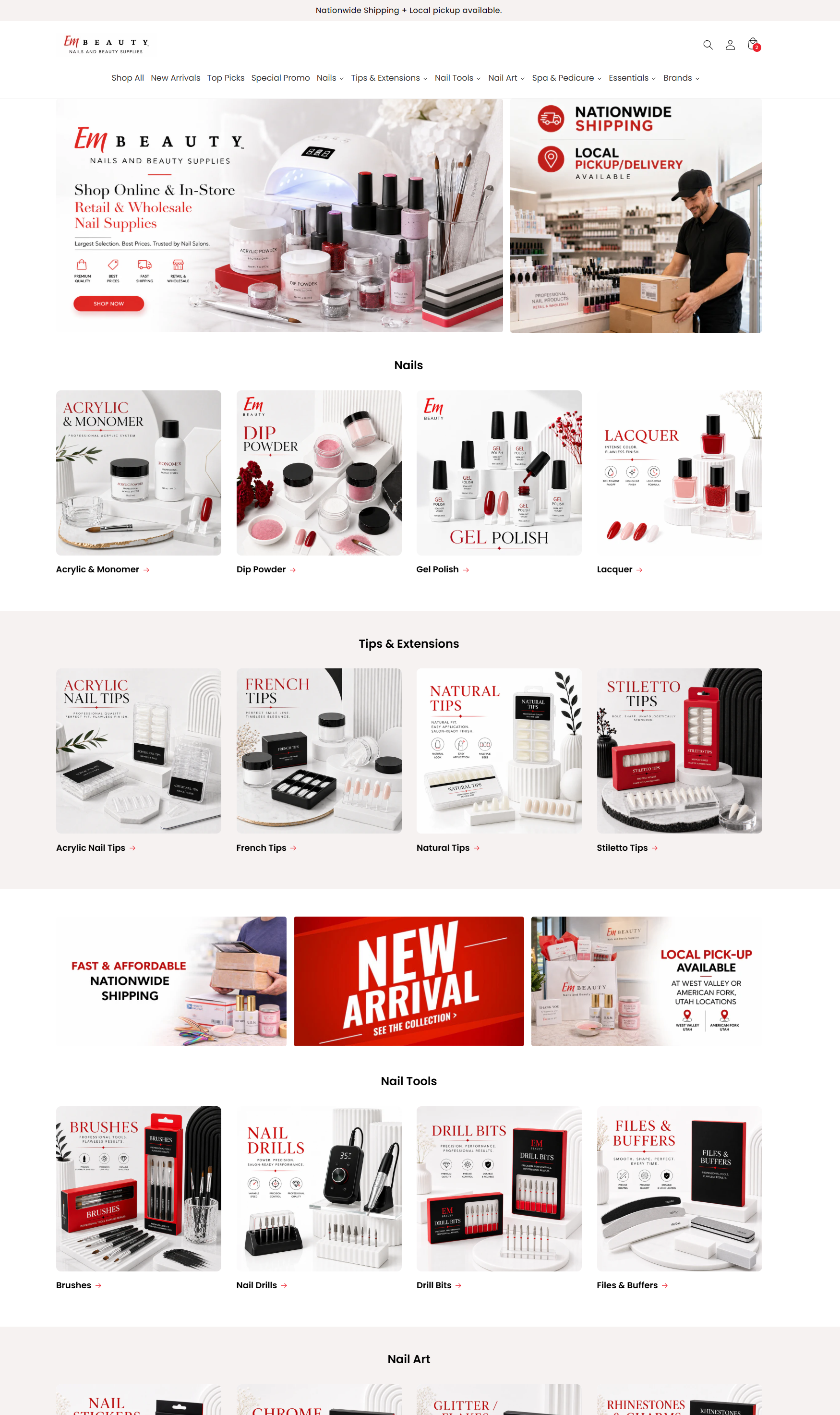
Shopify theme selection and customization is not a cosmetic decision. It affects page speed, conversion rate, SEO structure, and how much flexibility you will have as your catalog and marketing needs evolve.
Shopify’s theme store includes premium themes that are well-coded, mobile-optimized, and built for performance. For many businesses, a properly configured and customized premium theme is the right starting point. We do not steer clients toward custom builds when a quality theme serves the goal. What we do is configure that theme correctly, optimize the section structure, eliminate unnecessary app bloat that slows load times, and make sure the product page, collection page, and checkout templates are built for conversion and search visibility rather than just aesthetics.
Custom Shopify development is appropriate when your catalog structure, product logic, or brand requirements cannot be met by any available theme without significant compromise. Custom builds give you control over every template, every section, and every interaction pattern. They take longer and cost more. When the business case supports it, the result is a store built exactly to spec rather than adapted from someone else’s design logic.
The Shopify app store contains thousands of apps, and installing too many of them is one of the fastest ways to degrade a store’s performance. Every app that loads third-party scripts adds to page weight. Most Shopify stores we audit are running five to ten apps that are either redundant, barely used, or adding JavaScript overhead that materially slows the site.
Our approach to the app ecosystem starts with a lean philosophy. We identify what the business actually needs, find the most efficient app or native Shopify feature that handles it, and build an app stack that adds capability without adding drag. Review platforms, subscription billing, loyalty programs, upsell logic, and email marketing integrations all have legitimate roles. The question is which specific tools earn their place in the stack based on performance impact and actual business value.
Shopify stores have specific SEO requirements that differ from WordPress sites, and skipping these foundations at build time creates problems that are expensive to fix after launch. Utah SEO Experts builds SEO structure into every Shopify project from the start.
This includes clean URL structure across product and collection pages, proper canonical tag configuration to address Shopify’s known duplicate URL patterns, structured metadata on product and collection templates, schema markup for products including price, availability, and reviews, image alt text and file naming conventions, and a site architecture that makes logical sense for both crawlers and buyers. We also configure the sitemap, connect Google Search Console, and verify crawl access before the site goes live.
For Utah ecommerce businesses competing in both local and national search, these foundations are not optional. A Shopify store with weak SEO structure will get outranked by competitors who built it correctly. Our SEO team and web design team work on the same projects, which means the technical SEO review is not an afterthought. If you are also working with us on ongoing Utah SEO campaigns or ecommerce SEO, the Shopify build and the search strategy are aligned from day one.
Shopify Plus is Shopify’s enterprise tier, designed for high-volume merchants and businesses with requirements that exceed what the standard platform supports. It is a meaningful upgrade in specific situations and an unnecessary expense in others.
Shopify Plus makes sense when you are processing significant order volume and need dedicated infrastructure, when you require custom checkout logic through Shopify Functions or Scripts, when you are running a B2B operation that needs buyer-specific pricing and net terms, or when you need multi-store management across multiple markets or storefronts from a single backend. Plus also includes access to Shopify’s launchpad tool for sale events and automation features that standard plans do not offer.
We build and configure Shopify Plus stores for Utah businesses that have scaled to that point or are building toward it. The architecture decisions made at the Plus tier are different from a standard store, and getting them right the first time avoids costly rebuilds. For ecommerce operations in the St. George area, Salt Lake metro, or multi-state brands headquartered in Utah, we handle Plus builds with the same in-house approach we apply to every project.
Every Shopify project at Utah SEO Experts follows a structured process built around your business goals, catalog, customers, and growth strategy.
We start by learning how your ecommerce business actually works. That includes your product catalog, categories, customer acquisition channels, competitive landscape, shipping needs, payment requirements, and long-term growth plans.
From there, we plan the store architecture, navigation, product organization, collection structure, and SEO foundation. A Shopify store should not be built around a theme first. It should be built around how customers search, shop, compare products, and make buying decisions.
We build the page structure and internal linking architecture before visual design begins. This means every page has a defined purpose, a defined keyword target, and a defined place in the site hierarchy. Services pages are structured for local search. Category pages are structured for topical authority. The navigation is built around how users and search crawlers move through the site, not just how it looks on a menu.
Before any design work starts, we audit your current site if one exists, review your competitors, identify the keyword targets your site needs to rank for, and map the conversion paths for your business model. A roofing company in Salt Lake City and a law firm in St. George have different conversion paths, different competitor landscapes, and different technical requirements. We do not start designing until we understand both.
At larger web design agencies, a Shopify project often moves through too many disconnected hands. A project manager coordinates between an overseas development team, a local designer, and an account rep who may be managing fifteen or more other accounts at the same time. The result is usually a website that looks acceptable on the surface but lacks real context around your business, your customers, your products, your local market, and your long-term growth goals.
At Utah SEO Experts, your Shopify build is handled by a team that understands more than design. We look at your industry, your Utah market, your SEO situation, your product structure, and how customers are likely to find and buy from you. That context affects every decision we make, from navigation and collection structure to page layouts, content, technical setup, and post-launch optimization. The goal is not just to launch a Shopify store. The goal is to build a store that supports search visibility, conversion, and growth from the beginning.
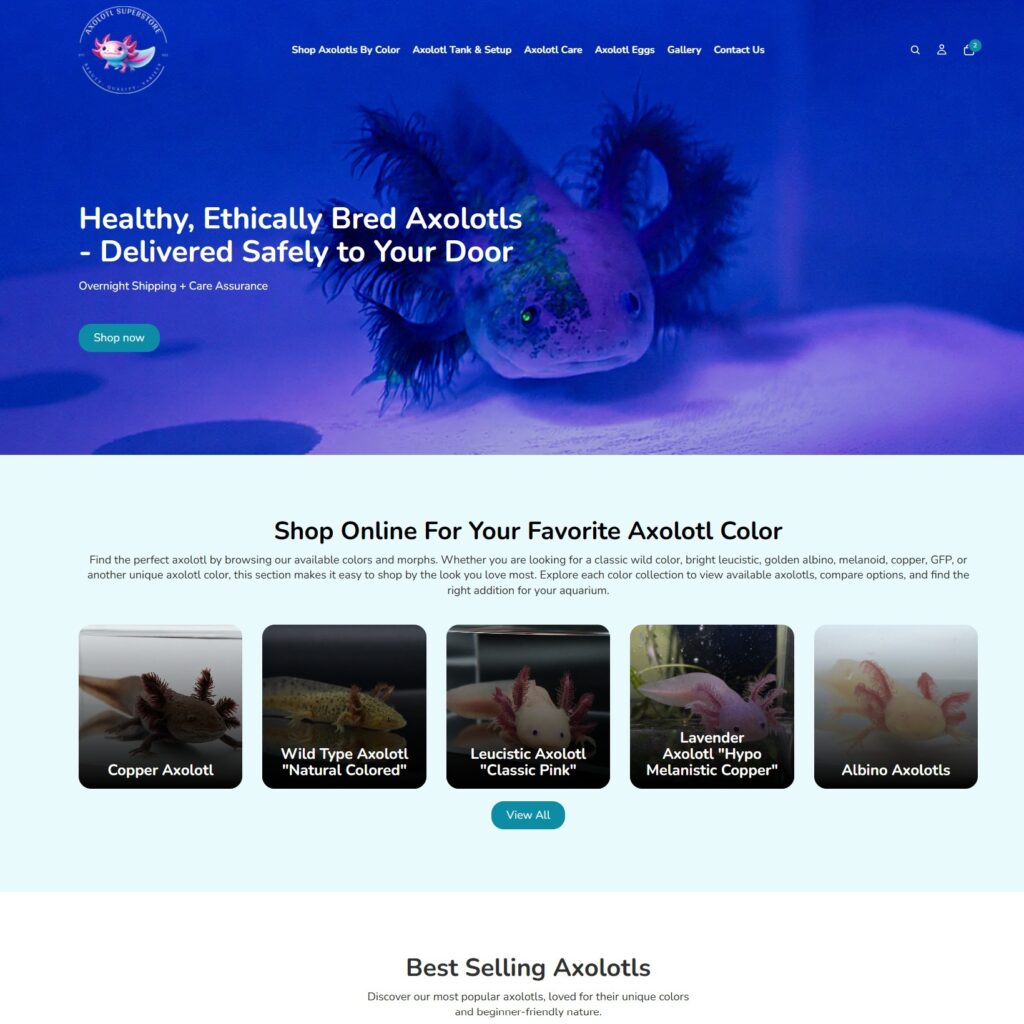
Utah ecommerce businesses do not all compete in the same way. A product-based company in Salt Lake City may need a Shopify store built for statewide and national sales, while a retail business in St. George may need local visibility, pickup options, product organization, and a website that supports both online and in-store customers.
Utah SEO Experts builds Shopify websites for businesses across Northern Utah, Utah County, Salt Lake County, Davis County, Weber County, Washington County, and Southern Utah. Because our web design and SEO teams work together, every Shopify build is planned with site structure, product organization, search visibility, user experience, and conversion strategy in mind.
Whether your business is local, regional, or shipping nationwide, your Shopify website should be built around how customers search, shop, compare products, and make buying decisions.
Layton Web Design
Bountiful Web Design
Ogden Web Design
Logan Web Design
If you are a Utah business looking for a digital marketing agency with a verified track record in your state and your market, we are worth a call. We will tell you what we can actually do for you, what results look like in your vertical, and what a realistic timeline is. No pitch decks, no pressure.