
WooCommerce powers more ecommerce stores than any other platform on the web, and for good reason. It runs on WordPress, which means you own your data, control your URL structure, and have access to an ecosystem of plugins and developers that Shopify simply cannot match for flexibility. But that flexibility comes with real tradeoffs, and if your WooCommerce store was built by someone who did not understand those tradeoffs, you are probably paying for it in slow load times, poor search rankings, or a checkout experience that bleeds conversions.
Utah SEO Experts builds and optimizes WooCommerce stores for Utah businesses that need a platform that can grow with them. Whether you are launching your first product catalog or migrating an established store onto a better technical foundation, we handle WooCommerce development in-house from architecture through launch.









WooCommerce and Shopify are fundamentally different products built around different philosophies, and the right choice depends on what your business actually needs, not which platform runs better ads.
Shopify is a hosted, closed platform. It handles your hosting, security patches, and core infrastructure, and in exchange you operate inside Shopify’s rules. You pay transaction fees unless you use Shopify Payments, you cannot modify checkout logic without a Shopify Plus plan, and your URL structure and site architecture are constrained by what Shopify allows. For businesses that want a fast, clean setup with minimal technical overhead, Shopify is a legitimate choice.
WooCommerce is open-source and runs on WordPress. You control your hosting environment, your database, your URL structure, and every layer of your site’s behavior. There are no platform transaction fees beyond your payment processor’s standard rates. You can build product types, checkout flows, and pricing rules that Shopify cannot replicate without expensive apps. For businesses where SEO is a priority, WooCommerce gives you significantly more control over the technical signals that drive organic rankings, including canonical tags, schema markup, faceted navigation handling, and crawl budget management.
The tradeoff is that WooCommerce requires more deliberate technical decisions. A poorly configured WooCommerce store with unmanaged plugin conflicts, unoptimized images, and no caching layer will outperform nothing. A well-built one will outperform a Shopify store in organic search over a 12-to-24-month horizon because you have tools available that Shopify restricts. We build for that horizon. If you are already on Shopify and want to compare your options, our Utah Shopify development team can walk through both scenarios with you.
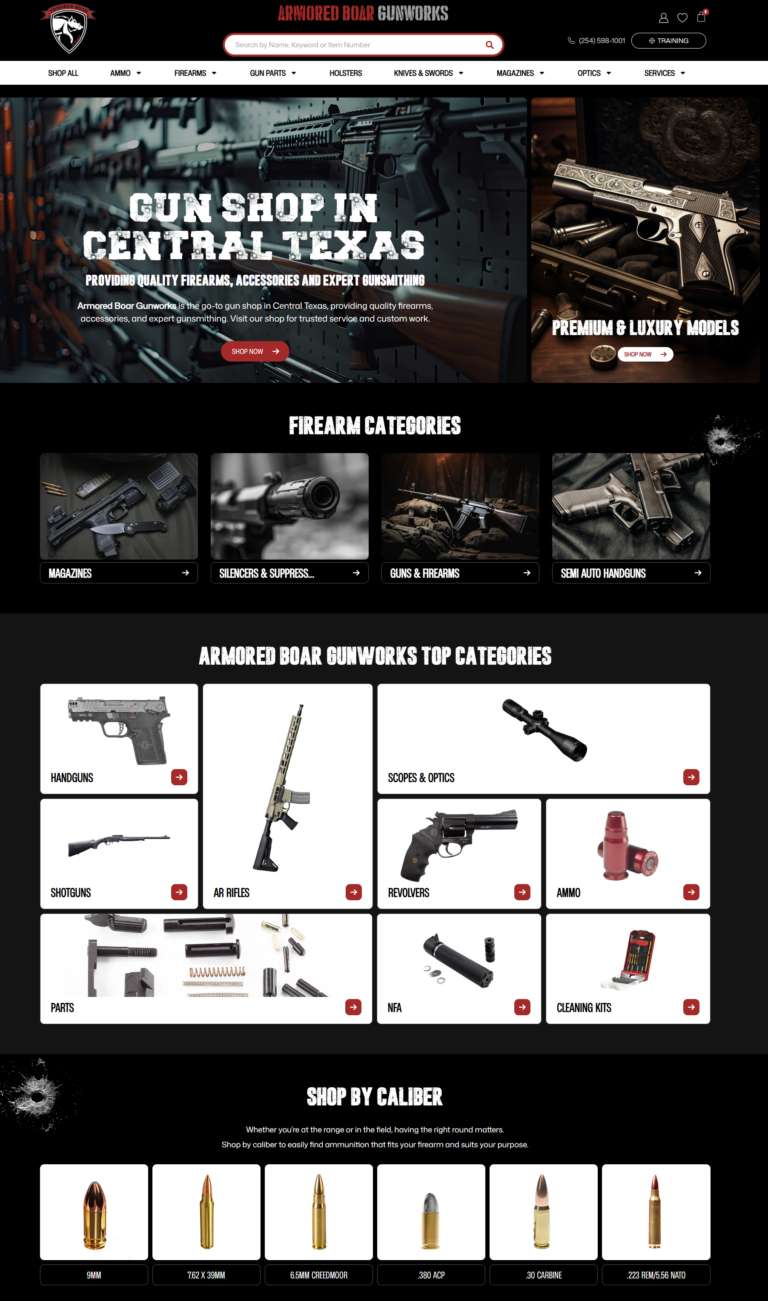
Most WooCommerce stores that come to us are not bad stores in concept. They are stores built without enough attention to the problems WooCommerce’s flexibility creates if you are not watching for them.
Bloated plugin stacks. WooCommerce’s plugin ecosystem is its greatest strength and its most common liability. Stores accumulate plugins solving overlapping problems, and the result is page load times that kill both conversions and rankings. We audit every active plugin, identify conflicts and redundancies, and rebuild plugin architecture around a lean core stack that does not fight itself.
Duplicate content from product attributes and category intersections. When WooCommerce generates URLs for every combination of product attribute, color, size, and category filter, you can end up with hundreds of thin or duplicate URLs competing against each other in search. We implement proper canonicalization, noindex rules, and faceted navigation handling so your product pages consolidate authority instead of fragmenting it.
Unoptimized images killing load speed. Product photography is large by default, and most WooCommerce installs serve full-resolution images with no compression or next-gen format conversion. We configure image optimization at the server and CMS level so your product catalog loads fast on mobile without sacrificing image quality.
Checkout friction that loses sales at the last step. A default WooCommerce checkout with too many fields, no guest checkout option, or a payment flow that redirects users off-site loses real revenue. We streamline the checkout experience and configure payment and shipping options that match how your actual customers want to buy.
WooCommerce supports virtually every major payment gateway, and setting them up correctly is not the same as just installing them. Utah businesses serving local customers alongside a broader national audience often need a payment stack that handles both smoothly.
We configure Stripe, PayPal, Square, and other Utah-relevant gateways with proper SSL, tokenization, and PCI compliance in mind. For businesses selling high-ticket items, we add buy-now-pay-later options like Affirm or Afterpay, which consistently reduce cart abandonment on orders above $300.
On the shipping side, WooCommerce’s native shipping zones allow real rate calculation by destination, carrier, weight, and dimensions. We integrate live-rate shipping from UPS, FedEx, and USPS so your customers see accurate costs at checkout rather than flat-rate estimates that erode your margins or drive abandonment when they seem too high. For Utah businesses with local delivery or in-store pickup, we configure those options cleanly without adding third-party plugin overhead.
WooCommerce scales well when the infrastructure underneath it is built for scale. It does not scale well when you take a shared-hosting setup designed for a 50-product catalog and push a 5,000-product catalog through it without changing anything else.
The variables that matter most as WooCommerce stores grow are hosting environment, database optimization, object caching, and query efficiency. We build WooCommerce stores on managed WordPress hosting environments with dedicated resources, Redis or Memcached object caching, and database query monitoring so performance does not degrade as your product catalog and order volume increase.
For stores crossing into enterprise territory with complex inventory, multi-location fulfillment, or B2B pricing tiers, WooCommerce’s extensibility through custom post types and REST API integrations makes it a more practical choice than migrating to a new platform entirely. We have built these integrations for Utah ecommerce businesses across industries ranging from contractors selling materials to med spas running recurring subscription models.
A WooCommerce store’s search performance is not determined by the platform alone. It depends on how the store is built, how product and category pages are structured, and whether the technical foundation helps search engines crawl, index, and rank your products correctly.
Utah SEO Experts treats WooCommerce development and ecommerce SEO as connected from the start. When we build a WooCommerce store, we include SEO architecture from day one: clean URL structures, product schema, breadcrumb navigation, strong category pages, and content that gives Google more to rank than a grid of product images.
After launch, our ecommerce SEO work focuses on product and category keyword targeting, internal links from blogs and supporting content, and technical audits that catch crawl issues before they become bigger problems. Businesses that treat SEO as an afterthought often end up rebuilding parts of their store later. We help prevent that.
If you are also running paid traffic, our Utah PPC team can build Google Shopping campaigns and retargeting strategies that work alongside your organic SEO instead of competing with it.
Every WooCommerce build Utah SEO Experts delivers is done in-house by our Utah-based team. We do not white-label development offshore or hand your project to a subcontractor in another time zone. That matters for communication, for iteration speed, and for the depth of understanding your project gets from the people actually building it.
Our web design work is part of a broader digital strategy practice that includes Utah SEO, AI search optimization, and paid media. When a client’s WooCommerce store is built alongside an active SEO campaign, the technical decisions we make during development directly support the ranking goals we are working toward in parallel. Those decisions are easier to make correctly when the same team is responsible for both.
Content on Utah SEO Experts’ web design pages is written by Brenan Gale, SEO Expert and founder of Utah SEO Experts. Brenan previously founded Be Locally SEO in 2009, grew it to a multi-staff agency over nine years, and sold it in 2018. Utah SEO Experts was founded in 2021 as a separate business, built around the same discipline: individual attention on every account, no client lost in a queue.
If your current WooCommerce store is underperforming in search, loading slowly, or losing sales at checkout, we will tell you specifically what is wrong before you commit to anything. Request a free WooCommerce audit and we will give you a direct assessment of what needs to change and what it will take to fix it.
Utah ecommerce businesses do not all compete the same way. A product-based company in Salt Lake City may need a WooCommerce store built for statewide and national sales, while a retail business in St. George may need local visibility, pickup options, product organization, and a website that supports both online and in-store customers.
Utah SEO Experts builds WooCommerce websites for businesses across Northern Utah, Utah County, Salt Lake County, Davis County, Weber County, Washington County, and Southern Utah. Because our web design and SEO teams work together, every WooCommerce build is planned around site structure, product organization, search visibility, user experience, and conversion strategy from the beginning.
Whether your business is local, regional, or shipping nationwide, your WooCommerce website should be built around how customers search, shop, compare products, and make buying decisions.
Layton Web Design
Bountiful Web Design
Ogden Web Design
Logan Web Design
If you are a Utah business looking for a WooCommerce website built with real strategy behind it, we are worth a conversation. We will tell you what your store actually needs, how WooCommerce fits your products and goals, and what it will take to build a site that supports SEO, sales, and long-term growth.
No pressure. No generic pitch deck. Just a clear conversation about what makes sense for your business.